
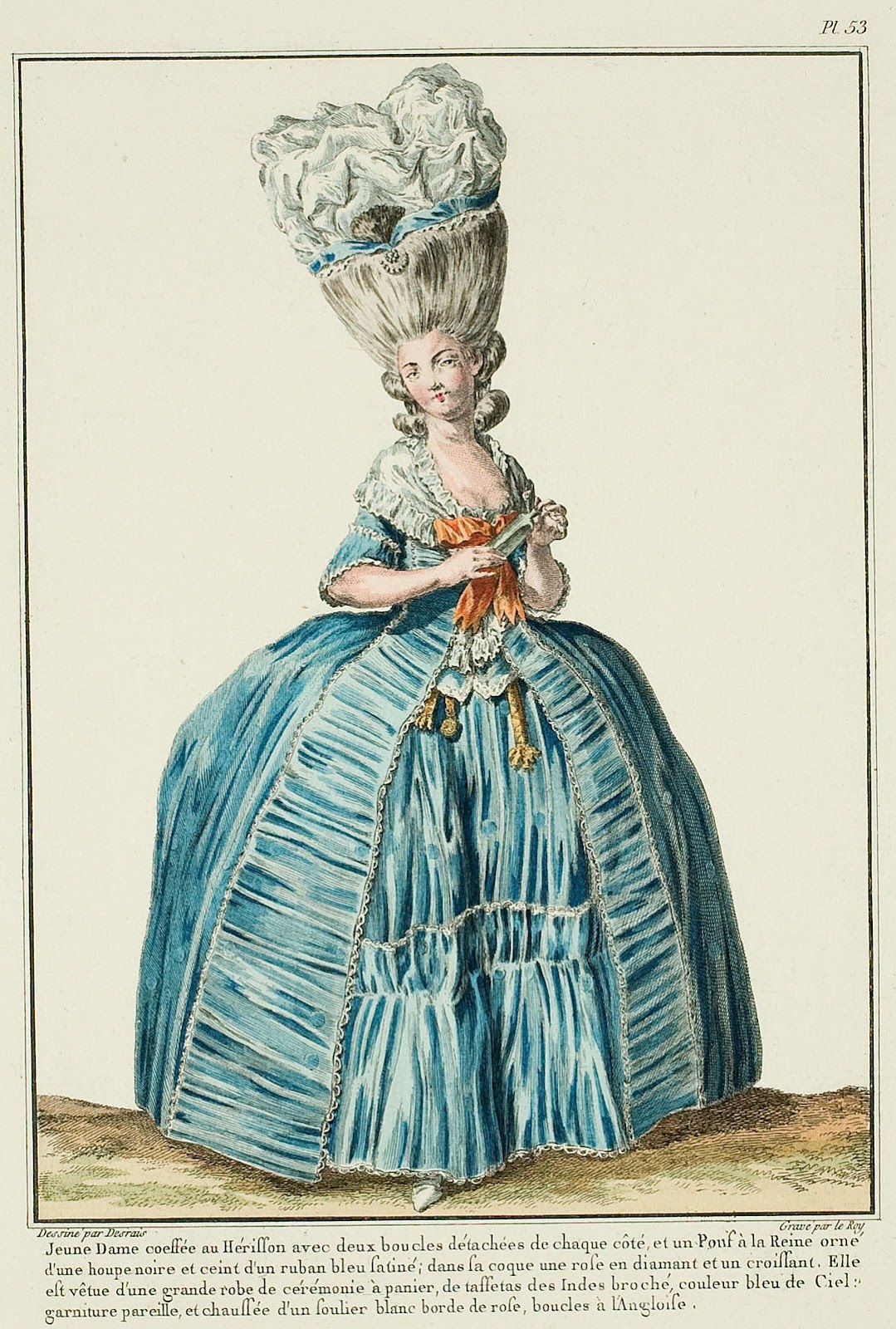
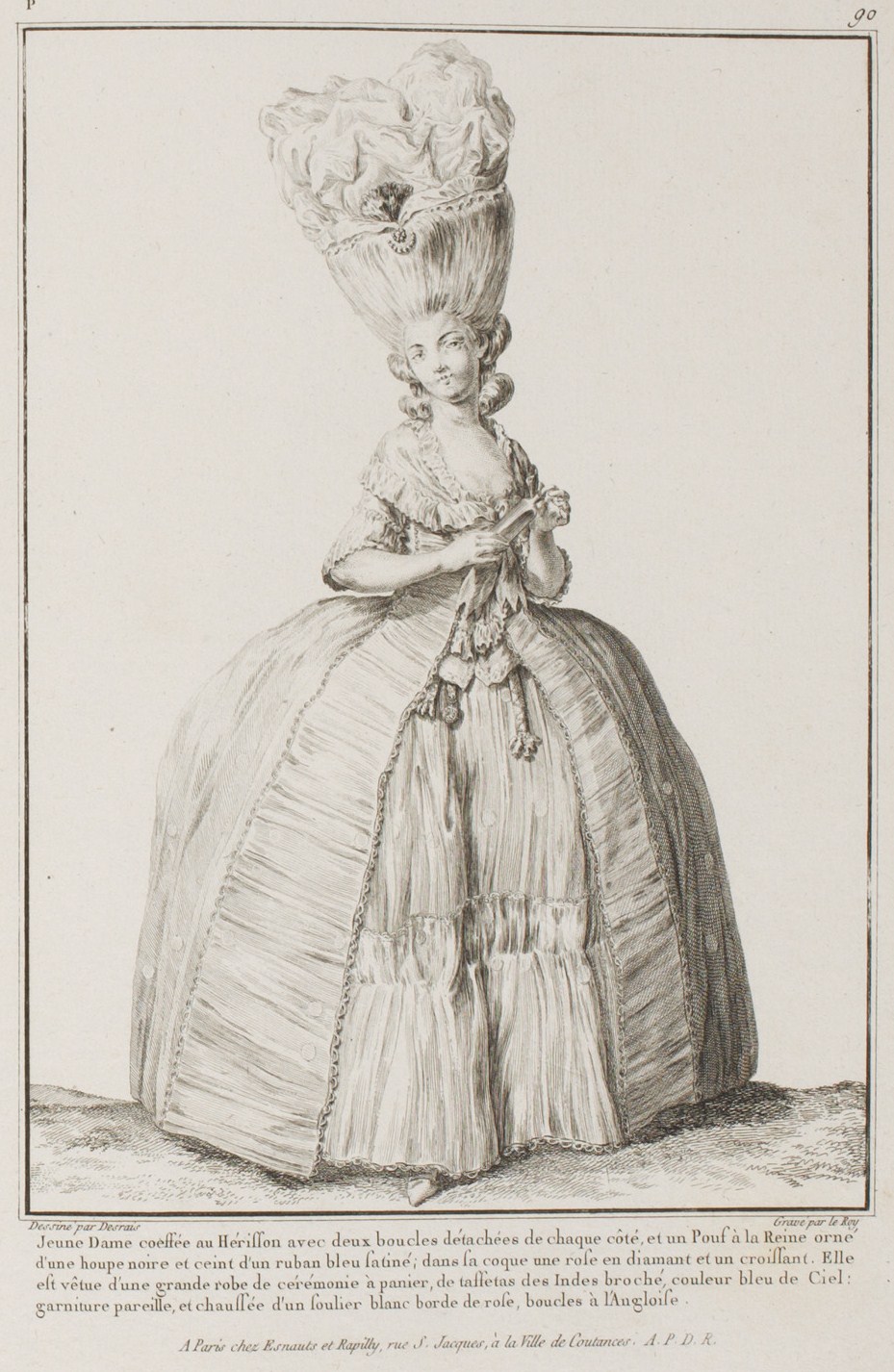
 Sacque, on a little hoop, with a parement in a box-pleated band: both edges of the parement are trimmed with épis and juliennes,* or a narrow lace. Very little sabot cuffs. Kerchief trimmed all around, caressing the shoulders entirely and leaving the chest almost uncovered. The two sides of the gown come very close under the contentement, and spread at the bottom of the waist, in order not to cover a little Peruvian vest which is in the place of a compere. Volant with a simple head, with trim matching the parement.
This neglected beauty has recourse to a salutary flask that her Doctor gave her, to chase away the vapors.
* Both words have botanic meanings: an épi can be an ear of corn or a sheaf of wheat; juliennes are flowers in the Brassicaceae family, such as julienne des dames (dame’s rocket). I’m by no means certain, but judging by the picture I believe it may refer to a type of fly fringe.

 Mimic of Modes
I hope this com will be published because every time I tried to comment on your blog, Blogger has eaten it :(.I think that for the word julienne, you have to keep the culinary use of the word in mind : a melange of chopped vegetables, a lot of different ones, and very colorful. So if it is really talking of fly frige, which is what I think too, it is a fly fringe very colorfull and a very complicated very over-the top-one (something like what is at the bottom left on this picture : http://www.metmuseum.org/collections/search-the-collections/80003836?img=5 )
LikeLike
Blogger can be such a pain.I think you're probably right. It's too bad the fly fringe was really going out by this point, because I'd love it if the text at some point gave me a good run-down about terms and history on the subject as it sometimes does
LikeLike